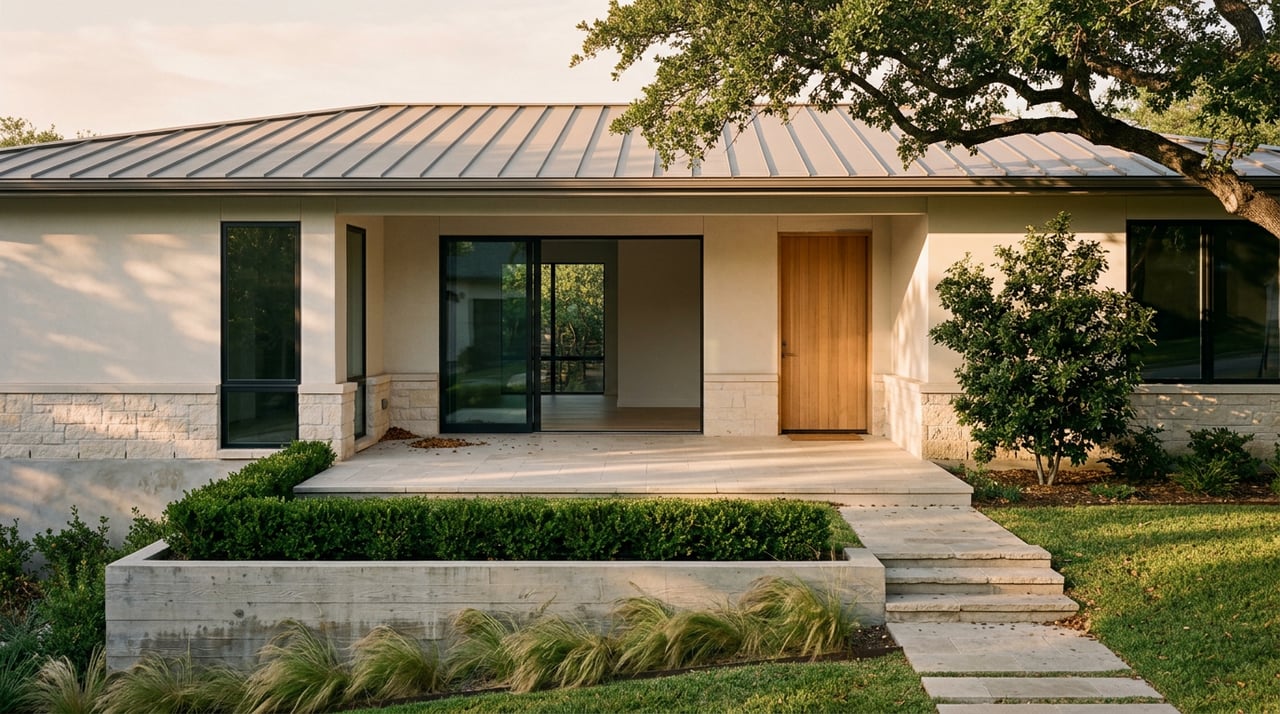
A buyer runs the numbers on a lot in Bouldin Creek. The listing agent mentions, almost in passing, that, as Community Impact reports, Austin's zoning reform now allows three units on almost any single-family lot in the city. The buyer does the math on rental income across three units instead of one, prices the offer accordingly, and moves toward closing feeling like the future value is already locked in.
Then the title search comes back. A restriction filed decades ago on that specific block limits what can be built there, regardless of what the city's current zoning code allows. Or the survey comes back, and the existing house and driveway have already used up most of the impervious cover the lot is permitted under a separate set of rules tied to the Barton Springs watershed, rules that predate the zoning reform by more than thirty years and don't bend for it.
Neither surprise shows up on a zoning map. Both show up in this specific cluster of neighborhoods more often than the citywide headlines about Austin's HOME Initiative would suggest.
What the citywide story actually says
Austin's HOME Initiative rewrote the Land Development Code in two phases. Phase 1, passed in December 2023, allows up to three housing units by right on most lots zoned SF-1, SF-2, or SF-3. Phase 2, which followed in 2024, cut the minimum lot size for a single unit from 5,750 square feet down to 1,800 square feet in many cases, as KXAN reported. Together, the changes reduced by more than two-thirds the amount of land the city requires to build a house.
The framing in most coverage is citywide and uniform: any qualifying lot, three units, done. That framing is accurate as far as it goes. It is also incomplete for a buyer trying to price a specific lot in Zilker, Bouldin Creek, Travis Heights, or Barton Hills, because two older layers of regulation sit underneath the zoning code and don't move just because the zoning code did.
The layer a zoning map won't show you
The first layer is private. Deed restrictions filed on individual lots or small groups of lots, some dating back to the 1920s through the 1940s when much of this area was first platted, can prohibit things the city's zoning now allows. A deed restriction doesn't disappear because HOME passed. City code sets the ceiling on what's legally possible. A deed restriction can still set a lower ceiling underneath it, and the zoning reform has no authority to override it, as Austin Free Press has reported.
This is not evenly distributed across the four neighborhoods that share the 78704 corridor. Austin Free Press reporting on how HOME has played out across the city has found that neighborhoods like Zilker and Bouldin Creek generally carry fewer of these older restrictions, which gives homeowners there more real flexibility to act on what the zoning code now permits. Areas with denser deed-restriction histories elsewhere in the city, including parts of Tarrytown and Allandale, have been described as effectively off-limits to HOME projects for the opposite reason. The pattern reflects how unevenly these protections were ever put in place.
Ora Houston, a former Austin City Council member who has lived in East Austin since childhood, said, as Austin Free Press reported, "It's the price of land, but it's also because we did not have deed restrictions. We were unable to get some of those other protections that people in West Austin have."
Inside this specific cluster, the variation runs block by block rather than neighborhood by neighborhood. None of this shows up when you pull up the zoning designation. It shows up in a title search, and often not until a buyer is far enough into a transaction that the discovery changes the deal.
The layer that predates the zoning reform by three decades
The second layer is environmental: the Barton Springs Zone is the watershed that Austin voters chose to protect with the Save Our Springs Ordinance back in 1992. That ordinance passed by a wide margin in a citizen-led ballot initiative aimed at limiting development over the Edwards Aquifer recharge zone that feeds Barton Springs, and it still governs how much of a lot can be paved or built on today.
According to Site Plan Creator, most Austin single-family lots outside this watershed can cover up to 45 percent of the lot with buildings, driveways, and other hard surfaces under current code. Inside the Barton Springs Zone, that ceiling drops to a range as low as 15 to 25 percent, depending on the specific classification of the land.
There is a partial exception. The City of Austin says a platted lot that existed before November 1, 1991 can sidestep some of the tightest impervious cover math, but that exception is written specifically for single-family and duplex work on structures under 8,000 square feet. A three-unit project, which is the exact product HOME was designed to unlock, is a different kind of construction than what that 1991 exception describes.
The practical effect is that a lot's three-unit zoning eligibility and a lot's three-unit buildability can be two different numbers. A house that already uses most of its impervious cover allowance on the existing structure and driveway may have very little room left for a second or third unit, no matter what the base zoning permits.
What this looks like across the four neighborhoods
Multiple listing service data through August 2026 shows a real spread in current pricing across this cluster, and that spread doesn't track cleanly with which lots actually carry redevelopment upside.
| Neighborhood | August 2026 median sale price | Deed-restriction pattern | Barton Springs Zone exposure |
|---|---|---|---|
| Zilker | $937,048 | Generally fewer historic restrictions | Varies by address |
| Bouldin Creek | $995,000 | Restrictions vary by address | Varies by address |
| Travis Heights | $850,000 | Restrictions vary by address | Less consistent, varies by address |
| Barton Hills | $1,100,000 | Restrictions vary by address | Varies by address |
Barton Hills carries the highest median of the four. Price and buildability are not the same variable here, and a buyer treating a higher asking price as evidence of more development room is reading the wrong number.
This spring a city council member introduced changes aimed at refining how the policy works more than two years in.
What to check before you assume a lot's upside
- Pull the deed and any recorded restrictions from the Travis County Clerk's records for the specific lot, not just the neighborhood in general
- Check the lot's watershed classification and impervious cover limit using the city's own Property Profile map at austin.maps.arcgis.com
- Ask how much of the lot's impervious cover allowance the existing structure, driveway, and any patios already use
- If a three-unit project is the plan, confirm directly with Austin Development Services whether the pre-1991 exception applies to that specific use, rather than assuming it carries over from single-family rules
- Treat "SF-3, HOME-eligible" on a listing as a starting point for due diligence, not a finished answer
A few questions worth asking
Does the HOME Initiative apply the same way in all four neighborhoods? The zoning code applies citywide the same way. What sits on top of it, deed restrictions and watershed rules, does not, and both vary within this cluster block by block rather than neighborhood by neighborhood.
Is all of Zilker, Bouldin Creek, Travis Heights, and Barton Hills inside the Barton Springs Zone? No. Coverage varies by address and needs to be checked address by address.
If a lot has no deed restrictions and sits outside the Barton Springs Zone, is three-unit development guaranteed? It removes two of the more common obstacles, but tree protection rules, setbacks, and the McMansion ordinance's floor-area limits still apply and still shape what actually fits.
If you're weighing a purchase in this part of Austin with redevelopment potential in mind, or you own a lot here and want a clear read on what it can actually support before you list it, Leslie Gossett can walk through the specific title history and watershed status with you before you're deep enough into a transaction for the answer to cost you something. Let's Connect.
This article is general information, not legal, tax or financial advice. Consult a qualified professional about your situation.